



Anyone who has spent an afternoon at a conference or a busy industry event knows how much small logistical friction can pile up. You’re trying to have a real conversation, but part of your attention is on whether you still have cards left, whether the person in front of you will actually keep the one you hand them, and whether you’ll remember later who said what. None of this is dramatic, but it adds up, and it quietly gets in the way of the thing networking is supposed to be about, which is building genuine professional relationships.
Digital business cards don’t change what networking is. They change how much effort the mechanical parts of it require. That distinction matters, because convenience isn’t just about saving a few seconds here and there. When the exchange of information becomes effortless, people tend to make more connections, follow up more reliably, and spend their attention on the conversation rather than the logistics around it. Let’s walk through where that convenience actually shows up in practice.
The Exchange Itself Takes Seconds
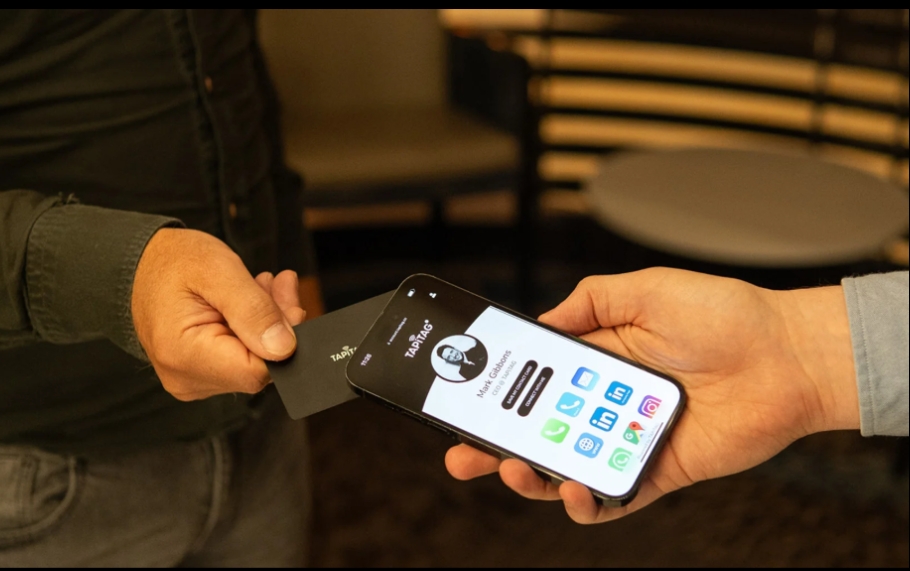
The most obvious convenience is also the one people notice first: sharing your details takes almost no time at all. Instead of digging through a wallet for a card, or asking someone to type your number into their phone while you spell out your email address, you simply tap your card against their phone or let them scan a code, and your profile opens on their screen straight away.
This is more significant than it sounds. Every small pause in a conversation, while someone searches for a pen or waits for a contact form to save, breaks the natural rhythm of the interaction. A near-instant exchange keeps the conversation moving, and it means the moment of swapping details feels like a natural part of the discussion rather than an interruption to it.
Nobody Has to Type Anything
Manual data entry is one of the quiet frustrations of traditional networking. Even with a paper card in hand, the recipient still has to transfer those details into their phone at some point, and that step is exactly where things tend to go wrong. Cards get lost before the transfer happens, numbers get mistyped, and plenty of people simply never get around to it.
A digital card sidesteps this problem entirely. The recipient can save your contact details straight into their phone with a single tap, usually through a “Save Contact” button on your profile, so the information moves from your card to their contacts without anyone typing a single character. It’s a small change, but it removes the step where most paper cards quietly fail.
You Never Run Out
Anyone who’s been to a large trade show has probably had the experience of running low on cards halfway through the second day, and then spending the rest of the event either scribbling details on scraps of paper or simply missing out on connections. A physical stack of cards has a hard limit, and it’s easy to underestimate how many people you’ll meet when you’re planning what to bring.
A digital business card has no such ceiling. You can share your details with one person or a hundred without ever needing to think about supply, which removes a genuinely stressful bit of preparation for anyone who attends events regularly. It also means you don’t have to guess in advance how busy an event will be, or carry a bulky stack of cards just in case.
Updates Happen Once and Apply Everywhere
There’s a convenience here that only becomes obvious after you’ve dealt with the alternative. When a paper card’s details change, the whole batch becomes outdated overnight, and you’re left choosing between handing out wrong information or reprinting everything. Even when you do reprint, cards that have already been handed out stay out in the world with the old details still on them.
With a digital card, you edit your profile once, and the change appears for everyone who taps or scans it from that point on. There’s no reprint, no waiting for delivery, and no risk of someone holding onto an old version with a disconnected phone number. For professionals who change roles, companies, or contact details, this alone tends to be one of the strongest practical arguments for making the switch.
Everything You Want to Share Fits in One Place
A printed card can only hold so much before it starts to look crowded. A name, a title, a phone number, an email address, maybe a website, and that’s usually the limit. If you also want to share your LinkedIn profile, a portfolio, a booking link, and a short introduction, you either cram everything onto a tiny surface or leave things out.
A digital profile removes that constraint. You can include a photo, a short bio, links to your work, a way to book a meeting, and anything else that’s useful, all in one place that the recipient can explore at their own pace. This means the person you meet doesn’t have to go hunting for you online afterward. Everything they might reasonably want to know is already a tap away, which makes it easier for them to follow up, and makes it more likely that they will.
Following Up Becomes Far Less Painful
A surprising amount of networking value gets lost in the gap between meeting someone and actually following up with them. Cards get left in jacket pockets, notes get forgotten, and by the time you get around to reaching out, the moment has often passed. This is one of the most common reasons connections made at events never turn into anything.
Digital cards help in a few practical ways. Many platforms log who has tapped your card and when, giving you a factual record to work from when it’s time to follow up, rather than relying purely on memory. Some integrate with a CRM so new contacts flow directly into your existing pipeline, and others let people book a call with you immediately after meeting. Each of these reduces the effort required to turn a brief introduction into an actual conversation, which is where the real value of networking tends to appear.
How the Convenience Compares Side by Side
It helps to see how the two approaches compare across the moments that actually matter during networking, rather than just thinking about them in the abstract.
|
Networking Moment |
Paper Business Card |
Digital Business Card |
|
Sharing your details |
Hand over a card, hope it’s kept |
Tap or scan, profile opens instantly |
|
Recipient saving your contact |
Manual typing, often skipped |
One-tap “Save Contact” |
|
Running out of cards |
A real risk at busy events |
Not a concern |
|
Updating your information |
Reprint everything |
Edit once, updates for everyone |
|
Sharing links and portfolio |
Limited by card space |
Unlimited, all in one profile |
|
Following up afterward |
Rely on memory and scattered notes |
Tap logs and optional CRM integration |
|
Cost of changes over time |
Repeated reprint costs |
Minimal after initial setup |
Looking at it this way makes the pattern clear. Almost every point of friction in traditional networking is either reduced or removed by a digital card, which is why the convenience feels cumulative rather than limited to any single feature.
It Works Across Different Kinds of Networking
Convenience isn’t limited to big conferences. One of the more useful things about a digital business card is how well it adapts to different situations. At a large trade show, it lets you handle high volumes without running out of cards. In a one-on-one client meeting, it lets you share a fuller picture of your work than a paper card could. In a casual introduction over coffee, it feels natural and low-key, without the slightly formal moment of pulling out a physical card.
It also works remotely. The same profile can be shared as a link in an email signature, a video call chat, or a message on a professional platform, which means the same card serves both in-person and online networking without needing separate versions for each.
Less Preparation, Fewer Things to Carry
A quieter form of convenience is simply having fewer things to think about. Professionals who network regularly often carry cards in multiple places, a wallet, a bag, a jacket, and still find themselves caught without one at an unexpected moment. Because a digital card can live on a phone, and often as a single reusable physical card as well, you’re rarely without a way to share your details. There’s no need to restock, no need to check that you packed enough, and no awkwardness when someone asks for your details at an unplanned moment.
Convenience for the Person Receiving Your Card, Too
It’s easy to think about convenience purely from your own side, but it matters just as much for the person on the other end. Someone who receives a paper card has to hold onto it, remember it, and eventually transfer the details somewhere useful. Someone who receives a digital card can save your contact in seconds, browse your profile if they’re curious, and reach out in whatever way suits them, all without needing to keep track of a physical object. This matters because a networking exchange only works if the other person actually does something with the information you’ve shared. Making that as effortless as possible for them increases the odds that they’ll follow up, and that’s ultimately what makes networking effective.
Choosing a Platform That Delivers This Convenience
Not every digital card platform delivers all of this equally well. Some make it easy to update your profile and share it widely, while others are clunky enough that the convenience gets lost in the setup. It’s worth choosing a platform that keeps the experience simple for both you and the people you meet. A dependable Digital Business Card solution built for effortless everyday networking, such as the one available at evrycard, is designed around exactly that idea, keeping sharing, updating, and follow-up as frictionless as possible.
Frequently Asked Questions
Is a digital business card really more convenient than a paper one?
For most people, yes. It removes several small frustrations at once: running out of cards, manual data entry, outdated information, and limited space for details. The time saved on each tends to be small, but they add up across many interactions.
Does the person I’m meeting need to download an app?
Generally, no. Most modern smartphones can read an NFC card or scan a QR code without any extra software, so the recipient can view your profile straight away.
What if someone’s phone doesn’t support NFC?
Most cards include a QR code as a backup, so anyone with a phone camera can still reach your profile. You can also share your profile as a simple link.
Can I use the same card for online and in-person networking?
Yes. The same profile can be shared by tapping a card in person, or sent as a link over email or chat, which makes it flexible across both settings.
Do I lose anything by moving away from paper cards?
For most people, very little. Some professionals keep a few printed cards for situations where a physical handoff feels more appropriate, but the digital version usually handles everyday networking better.
Final Thoughts
The convenience of a digital business card isn’t really one big feature. It’s a collection of small improvements that together make networking feel lighter: the exchange takes seconds, nobody types anything, you never run out, updates apply instantly, and following up requires far less effort. None of these change what networking is fundamentally about, but they do remove a lot of the friction that used to sit between meeting someone and actually staying in touch with them. That’s where the real value lies, and it’s why more professionals are choosing to make the switch.